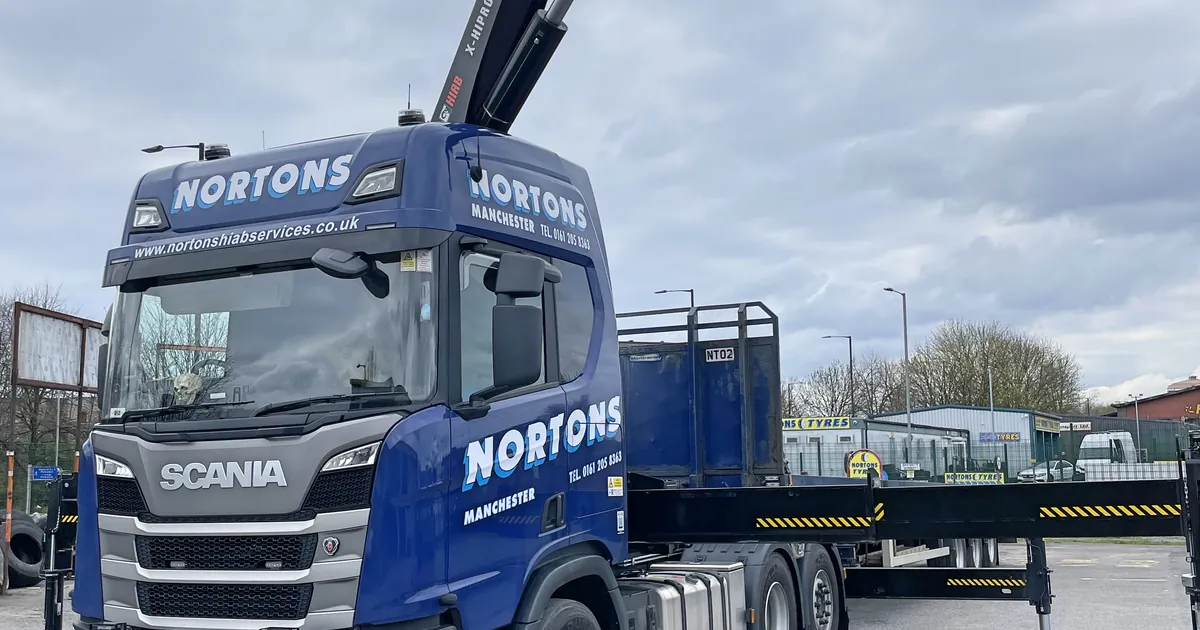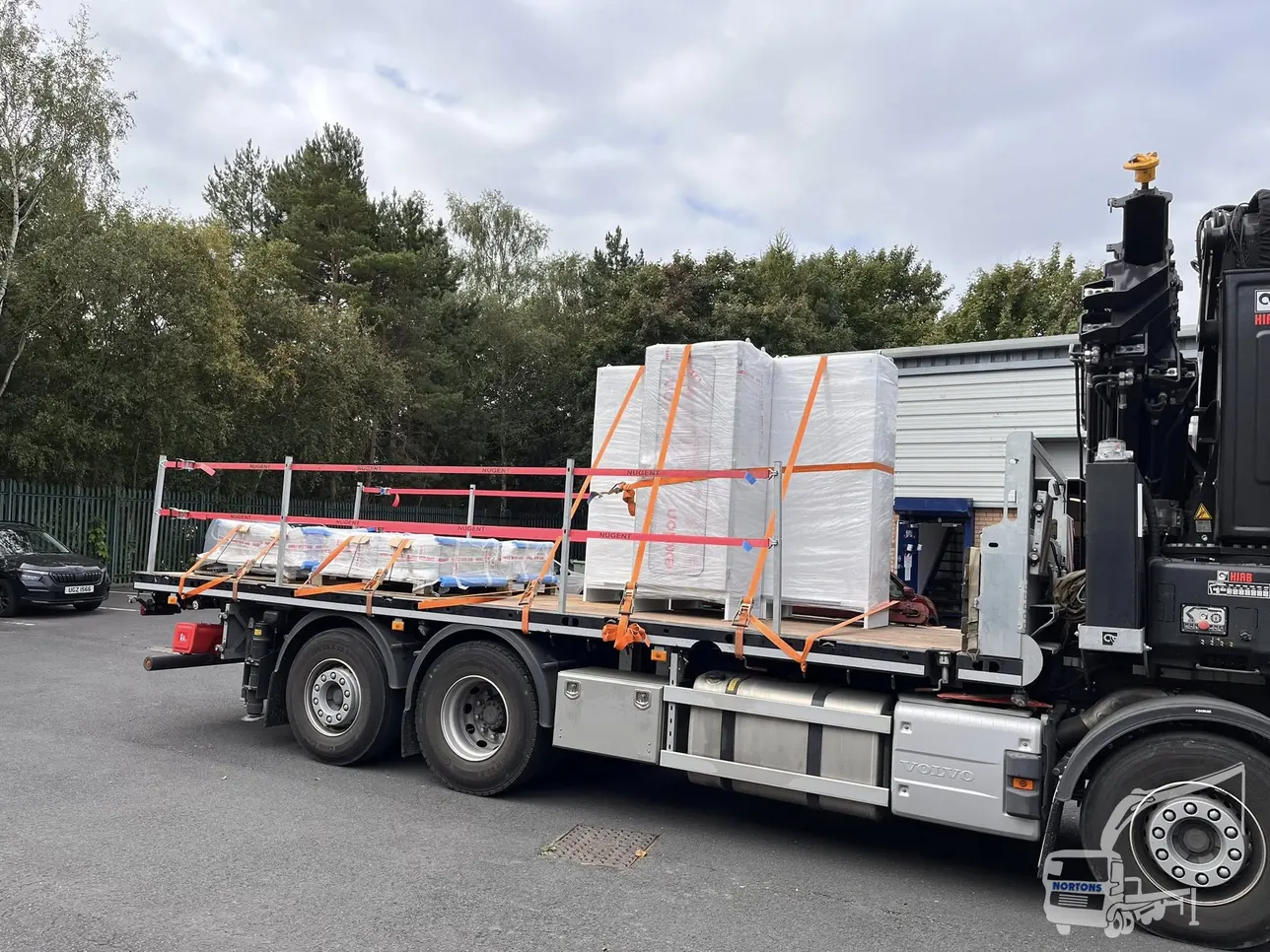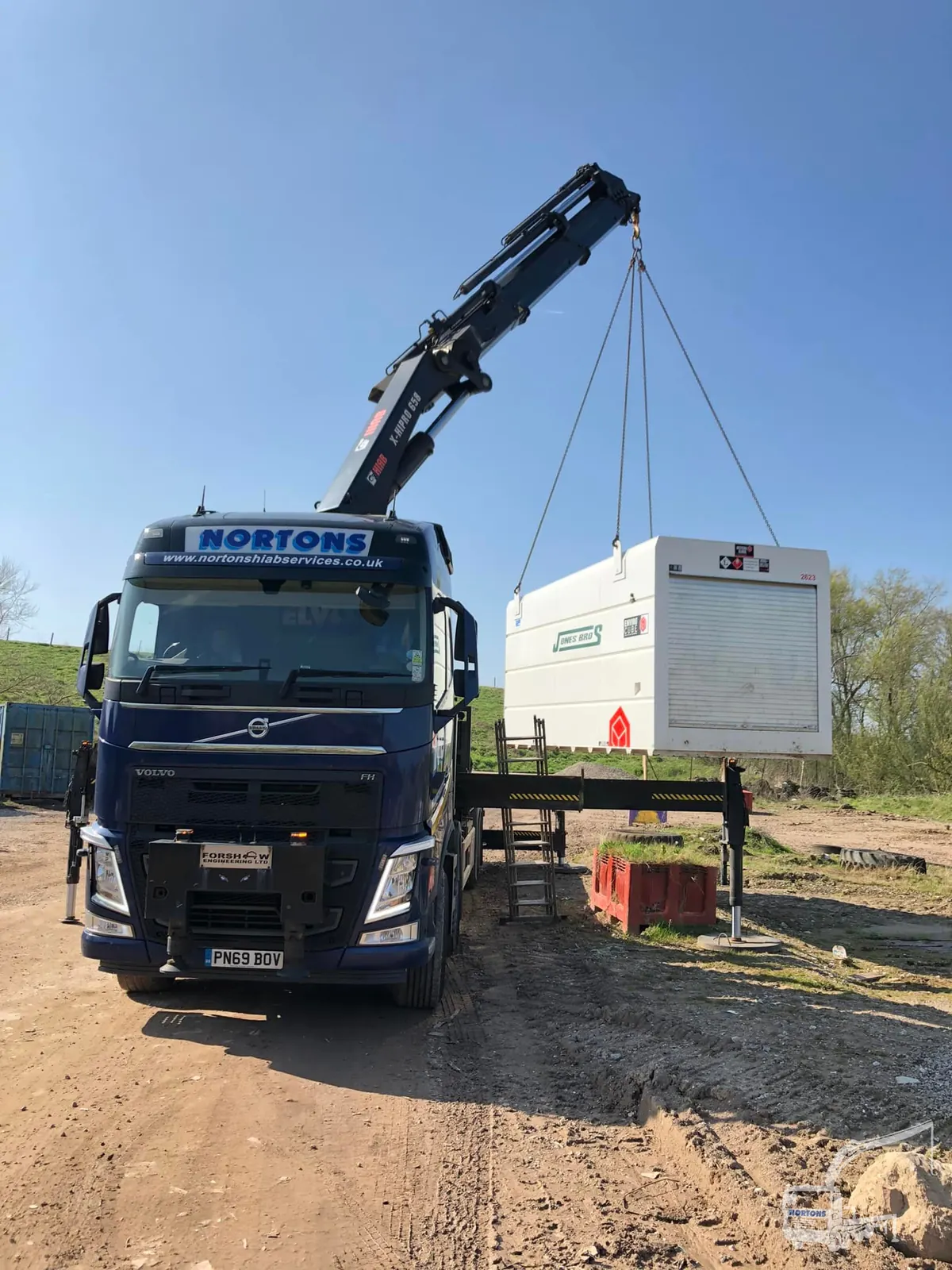
Portable cabins — site offices, welfare units, anti-vandal units and modular buildings — need careful handling. They're large, often top-heavy, and the final position matters. Hiab crane lorries are the standard method of delivery across the UK, and for good reason.
Collection and Loading
If we're collecting the cabin from a supplier, depot or previous site, our driver will assess the lift before anything moves. Sling points, weight distribution and any fragile fittings are noted. The cabin is lifted onto the flatbed and secured for the journey.
Delivery and Placement
At the destination, the process is reversed. The crane positions the cabin precisely — within a few centimetres if needed. For cabins being stacked or placed on plinths, this precision is essential. Our operators are experienced in multi-cabin sites where units need to align exactly.
Access Considerations
- The approach road needs to accommodate a lorry — typically 3.5m wide minimum
- Overhead power lines and trees need to be identified before the lift
- Soft or uneven ground may need temporary trackway or packing
- If the cabin is going above ground level, the crane reach and SWL must be confirmed in advance
Single Lifts and Multi-Drop Jobs
Many of our portable cabin jobs involve multiple units on the same day — collecting from different depots and delivering to one site, or moving several units within a site at once. We plan multi-drop routes to make this as efficient as possible.
For full details on our cabin transport service, visit the portable cabin delivery page. Get a quote online for your job.